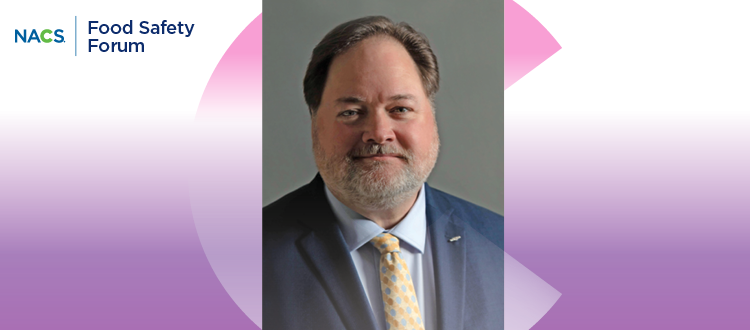
With 30 years of advocating to end foodborne illnesses and improve food safety efforts overall, Darin Detwiler, LP.D., M.A.Ed., serves as an expert in the field. He has been instrumental in shaping federal foodservice policy; is an advisor, author, columnist and frequent keynote speaker on the subject; and continues to teach, as well. He currently serves as an associate professor of food regulatory compliance, sustainable development and corporate social responsibility at Northeastern University in Boston and is the founder and CEO of Detwiler Consulting Group. Detwiler also currently serves as the chair of the Food Safety Program Committee at the National Environmental Health Association.
The 30-year milestone also marks a dark time for Detwiler, one that propelled him toward what would become his life’s work. His son Riley died in 1993 due to an outbreak of E. coli traced back to a fast food restaurant—a case of exposure to another person who was sick, not from Riley eating tainted meat himself. It’s a story Detwiler continues to retell and one attendees at the 2023 NACS Food Safety Forum will hear on October 3. He includes this story when discussing the true burden of E. coli, because the problem still exists.
Yes, food safety practices overall have made great strides in the last 30 years. However, as Detwiler points out here, there is still work to be done.
We will probably always live in a world where food safety issues exist. Looking back on your time advocating for greater attention to the issue, how do you feel food safety efforts have evolved?
Much has changed in 30 years. Back then, men didn’t openly talk about losing kids, for starters. And why would government say anything could be wrong about food? Certainly, there were no conferences about this 30 years ago. It is a completely different scenario today. I wonder if we will talk about food safety’s legacy 30 years from now and think: Look what we have done.
Do you think industries that handle food, from growers to packaged goods manufacturers to retailers, are making strides in food safety?
Underlying everything, we all expect our products to be safe. I deal with more stories of success and great examples and great leaders than I do failures. It is very easy to focus on the failures, but there are great motivators out there: people who want to elevate their brand and the industry and to improve food safety in general. We need to learn from mistakes and learn from new ideas. There are some great examples of ways we can improve food safety. Food safety culture is not about food safety in a boardroom or regulatory circles. It’s about how an organization values food safety. A food safety culture is as easy to lose as it is difficult to maintain.
Can you offer any aspirational examples of corporate food safety commitment?
I have worked with a few companies that impress me with things they do differently. I work with everyone from food manufacturers to distributors to operators. Some companies specifically draw in opinions from all different departments on food safety.
One that I have worked with established an employee-led food safety committee with a representative from every department, including technology and security. Everyone came with a different perspective.
There was even an auditor in this group, who noticed there was a freezer unit with a dent. He started inquiring and found out that, because it was a freezer unit, the floor would get slippery and the wheels on the forklift could not keep up with the slick floor. As a result, the forklift would sometimes hit the wall.
So this problem goes up the chain of command to find a solution, which was to purchase nonslip, top-of-the-line wheels for the forklift.
Now, here’s what’s mind-blowing: The head of engineering, who was also on this employee-led food safety committee, said, “No.” The element that made those particular top-of-the-line nonslip wheels work was that they were made with walnut shells [to provide texture and grip]. Anyway, this was a plant that was rated for being nut allergen-free. The walnut shells would have violated their certification, so it was important to find a different solution. That connection probably never would have happened if the plant did not have all levels of people involved.
Are smaller chains or mom and pops at a disadvantage in this area compared with larger chains with greater resources?
Food safety should not be at a premium. It should be part of the culture at the smallest single location as much as at the biggest chain.
Yes, larger chains may have some advantages in market power and the ability to demand greater transparency from suppliers and distributor partners. But all businesses that handle food have to understand the need for greater transparency at all levels today.
Can you elaborate a bit on that?
It’s critically important to avoid the breakdown of trust with consumers. Businesses of every size need to ask themselves how they expect to maintain that trust at the store.
Look at what happened with Family Dollar stores out of Arkansas last year and its rodent-infested distribution center. They had repeated violations and ended up in a situation where they had to do many product recalls and eventually close 400 stores. The reputation around that name took a big hit. Why did they not prioritize their reputation?
Do you feel a greater impact when working with policymakers or corporations directly?
Over the past 30 years, something that has really validated what I do is the many people I run into who say how hearing me talk about food safety was one thing, but when I tell people that what they do is part of a Herculean effort, and they are heroes, that’s another thing. Even in this era of Marvel TV shows and superhero movies, consumers see those in the food industry who prevent food safety failures as heroes.
I focus on trying to make sure they understand that they are seen and how important their job is. I see the results of my work when people at conferences or corporate events come up to me and tell me how my message inspired them or motivated them to rethink their role in food safety, that my words have carried them through tough times in their food safety career. To me, this is where it’s really at.
On their own, technology and tools and policies do not mean anything unless we make sure that all the people along the way from farm to fork in food safety understand the “why” behind food safety and that they are validated, supported and celebrated for their courage.
Today’s food industry leaders need to do more than simply celebrate the bright spots from their company’s past. They need to focus on their “why” behind their food safety values to serve as part of their compass to drive their legacy over the next 30 years.