Tobacco products have long been a significant part of the business of convenience stores. Consumers like the ability to buy those products quickly and conveniently.
Over the past decade, however, that market has changed significantly. New alternative products including electronic cigarettes or vapor products, heat-not burn products, and oral products have come to market. The change has been profound enough that the market is often referred to as the nicotine market rather than the tobacco market. Consumer preferences are in flux.
Unfortunately, regulation in Washington has not kept pace with these changes, which has had profound implications for convenience businesses and the nation.
Regulation Complications
In 2016, the Center for Tobacco Products (CTP) within the U.S. Food and Drug Administration (FDA) decided that these new nicotine products were “tobacco” products under federal law and therefore would be regulated by CTP.
That raised a complication because new tobacco products under federal law need authorization from the CTP before they can be sold. But the products were already being sold when the decision was made that the existing law applied to them. CTP could have tried to order all those products off the market pending authorizations. Of course, that would have caused chaos.
Instead, CTP allowed the products to be sold while manufacturers applied for authorization and received decisions. Applications for vapor products on the market were due in September 2020. CTP said that the products could continue to be sold for one year after applications were filed to give regulators time to make decisions.
But that didn’t go the way the CTP planned. It’s been five and a half years since the application deadline and thousands of applications are still pending. CTP has authorized a small number of products—39 vapor products and 26 oral/pouch products to be exact—and denied millions of others. Many of the denials have been challenged with enough success that many of them can still be sold.
Along the way, the FDA decided that it wouldn’t tell anyone the specific products that were denied or those that were tied up in challenges to their denials. What they couldn’t explain was how market participants were supposed to do business the right way when key information was secret and there weren’t enough authorized products to go around. The industry found itself in the regulatory equivalent of Dean Wormer from “Animal House” declaring that Delta Tau Chi was on “double secret probation.”
Bad actors took advantage of the regulatory confusion and started flooding the space. In fact, FDA Commissioner Martin Makary has said that as much as 85% of vaping products sold in the U.S. are illegal. Many of those products are coming into the country illegally from China.
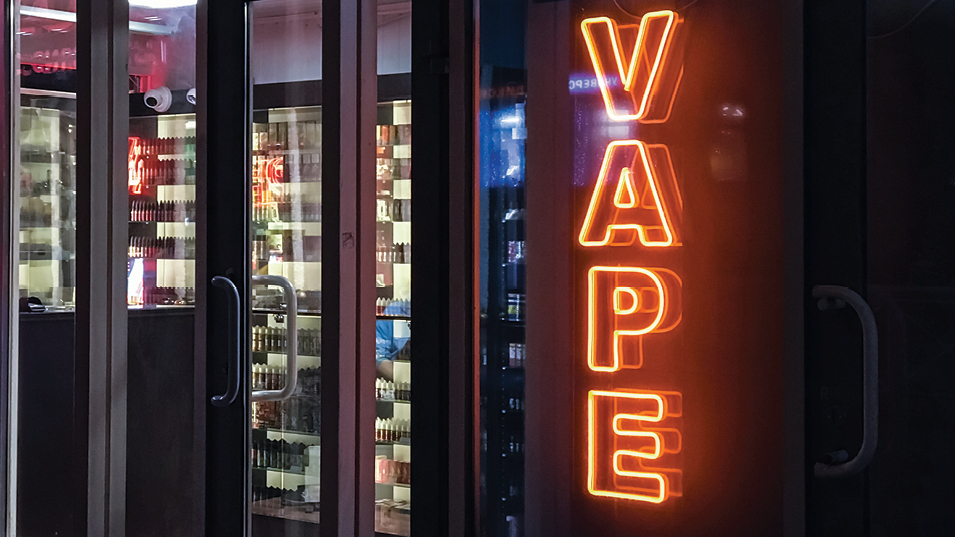
The problems for convenience stores trying to do the right thing are obvious. Those that try their best to comply often lose sales to unscrupulous vape shops that are willing to sell illegal product—often at lower prices and with flavors that careful stores can’t sell.
The problems for consumers are real as well. No one can know for sure what is in illegal products from China. Almost by definition, those manufacturers are not following all the laws on safe manufacturing practices. And vape shops willing to sell those products are much less likely to keep them out of the hands of minors than convenience stores that follow the law.
Cleaning Up the Market
NACS has made advocacy to clean up this market a top priority. Last year, NACS was part of the formation of the new Regulate Smarter Coalition. It was put together to push regulators to bring greater clarity and enforcement to clean up the nicotine market.
There have been some successes along the way. Last fall, the FDA took action to seize millions of dollars in illegal vapes before they got into the U.S. market. But much more still needs to be done.
During NACS Day on the Hill in March, every meeting included conversations with congressional offices about this problem. Members of Congress agreed to sign letters pressing the FDA to crack down, including by giving the market more regulatory clarity to allow for voluntary compliance and by increasing enforcement.
There is no reason that such a large part of the nicotine market should be illegal. These products actually have less health risks than traditional tobacco products. It appears they are the future of the category. With clear, reasonable regulation in place, business can be won on the merits by the best operators—not by those willing to skirt the rules.
There are signs that the FDA understands all this. The problem was not of the current administration’s making. They inherited it, but now it’s up to them to fix it. NACS’ goal is to ensure the administration acts to clean things up. After all, we’ve all seen the alternative path laid out by Dean Wormer—it didn’t end well.