This is the third of a five-part series that explores exclusive NACS consumer data. This month’s article dives into consumer perceptions on other conveniences like check-out times and speed of service.
Retail experts often talk about a sea of sameness, where retail offers are indistinguishable from each other. When that’s the case, the main reason customers select a c-store is because it’s the closest location when they need something.
But with virtually all retail channels also focusing on convenience, retailers need to find ways to differentiate themselves, whether in how they save customers time, how they promote their offers on social media or how they deliver value.
Perceptions of Convenience Stores
In the 2026 NACS Convenience Voices survey, 56% of consumers say that convenience stores differ quite a bit from each other, versus 38% of consumers who say c-stores are generally the same. How does that unlock opportunities for progressive retailers, and what does this mean for overall industry image?
Unlike the quick-service restaurant industry, which has an estimated 220,000 highly consolidated locations around large franchises, the convenience store industry is dominated by smaller operators who operate a few stores that can vary considerably. Overall, 95,672 of the 151,975 convenience stores in the U.S. are owned by a company that has 10 or fewer stores, representing 63% of the total store count. Meanwhile, companies operating 500-plus convenience stores own 33,810 stores, or 22.2% of the overall total.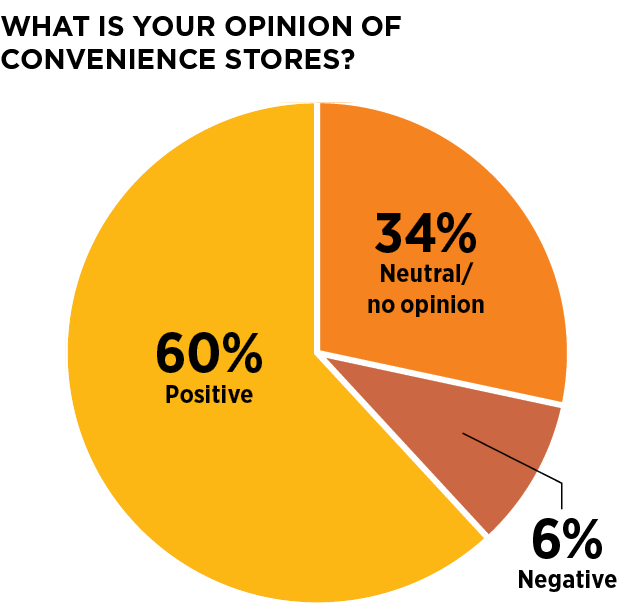
From an industry image perspective, there is a big difference in how to interpret what consumers say perceptions of store quality means. Do they think some stores are better than others or do they think some stores are worse? Saying that another way, looking at extremes, are they thinking of a Michelin-rated dining experience or an unkempt place with the bathroom key attached to a dirty hubcap?
Fortunately, it appears that the image is largely positive. Overall, three in five consumers have a positive opinion of the industry—10 times more than the percentage who have a negative view. The 56% of consumers who say that stores “vary quite a bit” have an even more positive impression of convenience stores, with 68% of this group saying they have a positive impression. However, not all demographics are as positive; only 51% of consumers who are in the West and 53% of women have positive impressions.
Most consumers also say that shopping at c-stores is something that they enjoy (54%), as opposed to a chore (24%). However, grocery store shopping scores higher as something that consumers enjoy (63%), even though more people also say it is a chore (31%). Improving already fast speed of service may be one way to make c-stores even more enjoyable.
Speeding Up Service
Fast transactions have always been a big part of the convenience offer. On average, it takes less than four minutes for a customer to get out of the car, go inside to shop, pay for items and return to the car, although that time can increase if prepared food or beverages are purchased.
Consumers give the industry credit for quick transactions: 90% say shopping at stores is easy and 88% say that convenience stores are fast. The only two attributes that score higher are associated with location and hours of operation, attributes that don’t have room for much adjustment—either you are nearby and open or you are not.
However, of all the elements tied to a c-store shopping experience, the part that consumers most want to see speeded up is the time spent waiting in line and paying, with 37% identifying those two areas as the most inconvenient elements of shopping at a c-store.
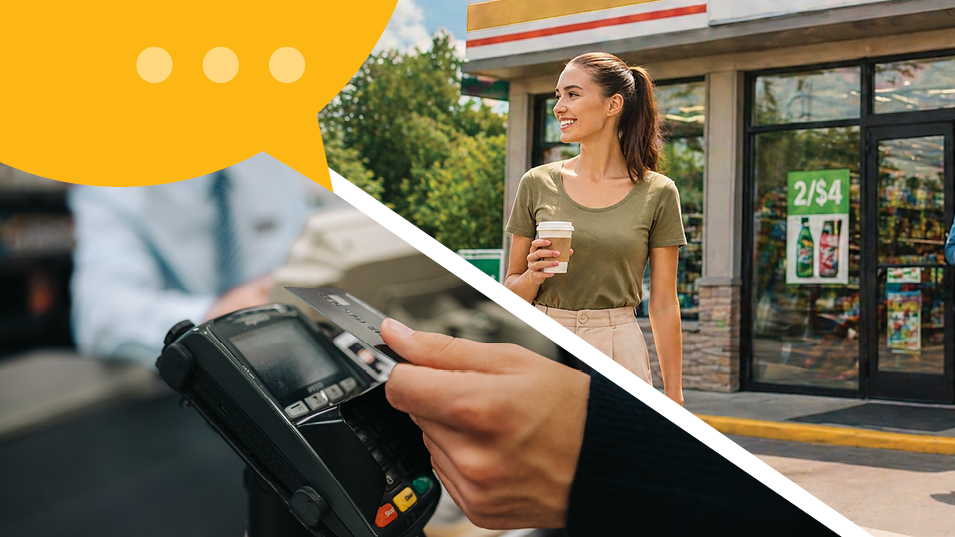
Consumers say self-checkout is the top technology that can improve convenience, with 55% citing that offer, far ahead of other time-saving methods like mobile pay (35%), or order ahead (21%).
As stores consider self-checkout to enhance speed of service, it’s important to also protect the overall customer experience. As speakers at NACS events note, technology is best used to enhance how employees interact with customers, rather than replace that interaction. Similarly, other channels have embraced self-checkout to reduce costs, and it has negatively affected the customer experience for those who want a human connection.
Time to Embrace Social Media
Whether or not you are on social media, your customers are. Social media presents an enormous opportunity to attract new customers or to get regular customers coming to your store more frequently.
Social media allows you to showcase your culture and brand, and to give people a sense of your store without ever setting foot in it. Compare that to just 10 or so years ago, when the reason most stores gained first-time customers was because they were that convenient right-hand turn when a consumer needed something, whether fuel, food or beverages.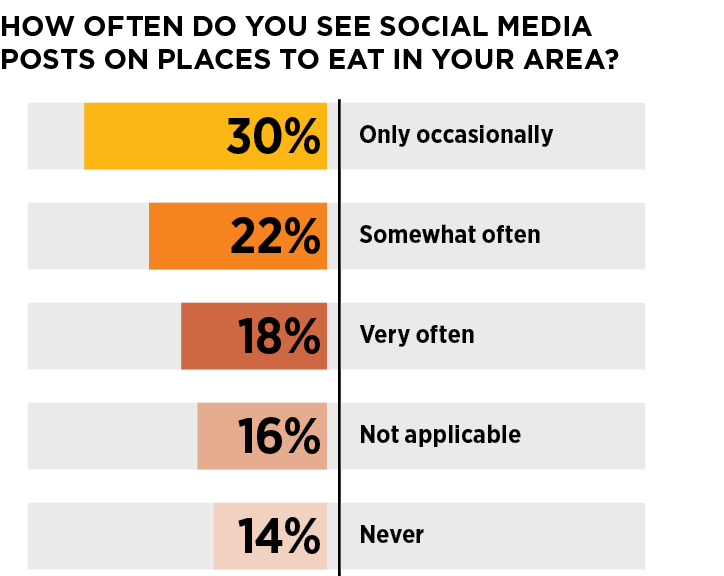
Social media has been particularly effective for showcasing food at c-stores—and has made stars out of “Gas Station Tailgate Review” creator Stafford Shurden and the “Gas Station Gourmet” (and NACS Magazine writer) Al Hebert, among others.
If you aren’t posting on social media, your competitors are; 40% of consumers overall—and 64% of the prized age 18-34 years old demographic—say that they see social media posts about food in their area at least somewhat often. (Eight percent of consumers say they are not on social media; the largest demographic not on social media, unsurprisingly, are those ages 65 and older.) Frequent c-store customers—those who shop inside the store at least weekly—are also likely scrolling though social media; 61% say that they see social media posts on places to eat at least somewhat often.
And consumers who see food-focused videos take action. Of the 70% of consumers who say that they occasionally see social media posts about places to eat, most (56%) say that a social media post has led them to eat at a place. That percentage jumps even higher for those who are frequent c-store shoppers (at least weekly) and those ages 18-34.
Prices Can Drive Customer Traffic
Even before the recent spike in fuel prices, consumers said that they were price sensitive. When the survey was conducted, gas prices nationally were in the $2.80s. That price sensitivity has only increased as gas prices have increased.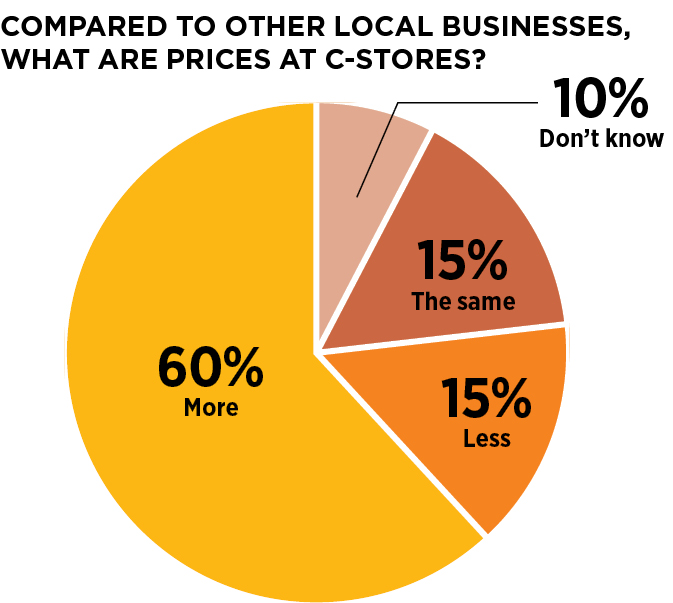
While convenience stores generally sell many of the same items, especially for packaged food and beverages, prices can vary from c-store to c-store. Roughly half of consumers say that gas prices and in-store items can vary considerably from store to store.
Consumers also say that prices are higher in the convenience channel—and that might also affect their opinion that convenience stores are more profitable than other local businesses.
With consumers concerned about high prices and value, it may become even more important to become engaged on social media to tell your story, not just about food, but about value and overall customer experience.
The Good News: They Like Us
Clearly, there are some opportunities for convenience stores to differentiate themselves. How stores take advantage of these opportunities will continue to raise the bar on overall perceptions related to our industry, which are already strong.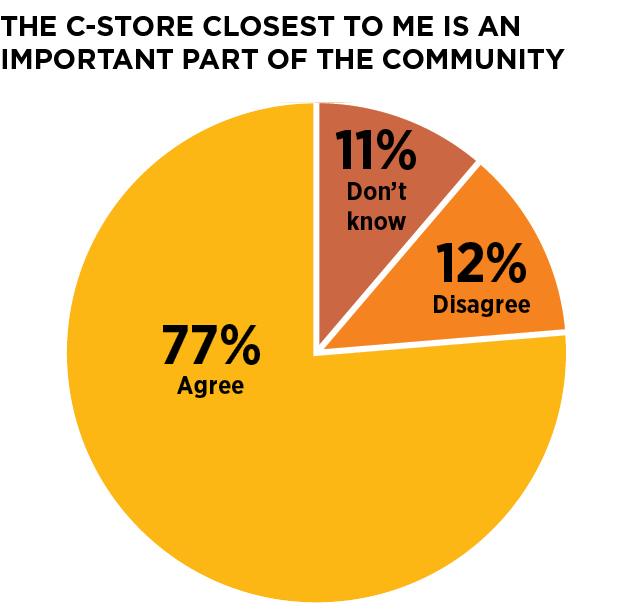
Consumers are much more likely to agree that convenience stores are an important part of their community.
Let’s end this on a high note. By a more than 6:1 margin, consumers say that convenience stores are an important part of their communities. And even more impressively, consumers say that convenience stores make life more, well, convenient.
Charts and insights are based on a national survey of 1,207 consumers conducted January 30-February 6, 2026, for NACS by national public opinion research firm Bold Decision (bold-decision.com). In some cases, total may not add up to 100% because of rounding.
.jpg?language=en-US)