Two key takeaways that were shared at the 2026 NACS State of the Industry Summit:
- Focus on growing inside transaction counts
- Build bigger baskets—one item at a time
Inside transactions declined 1.6% in 2025 versus 2024 on a per store, per month basis. Despite an increase in basket value by 24 cents year over year in 2025, higher costs offset that gain, as increases in cost of goods sold and operating expenses outpaced inside gross profit growth, resulting in an 8-cent decline in inside transaction basket profitability from 2024.
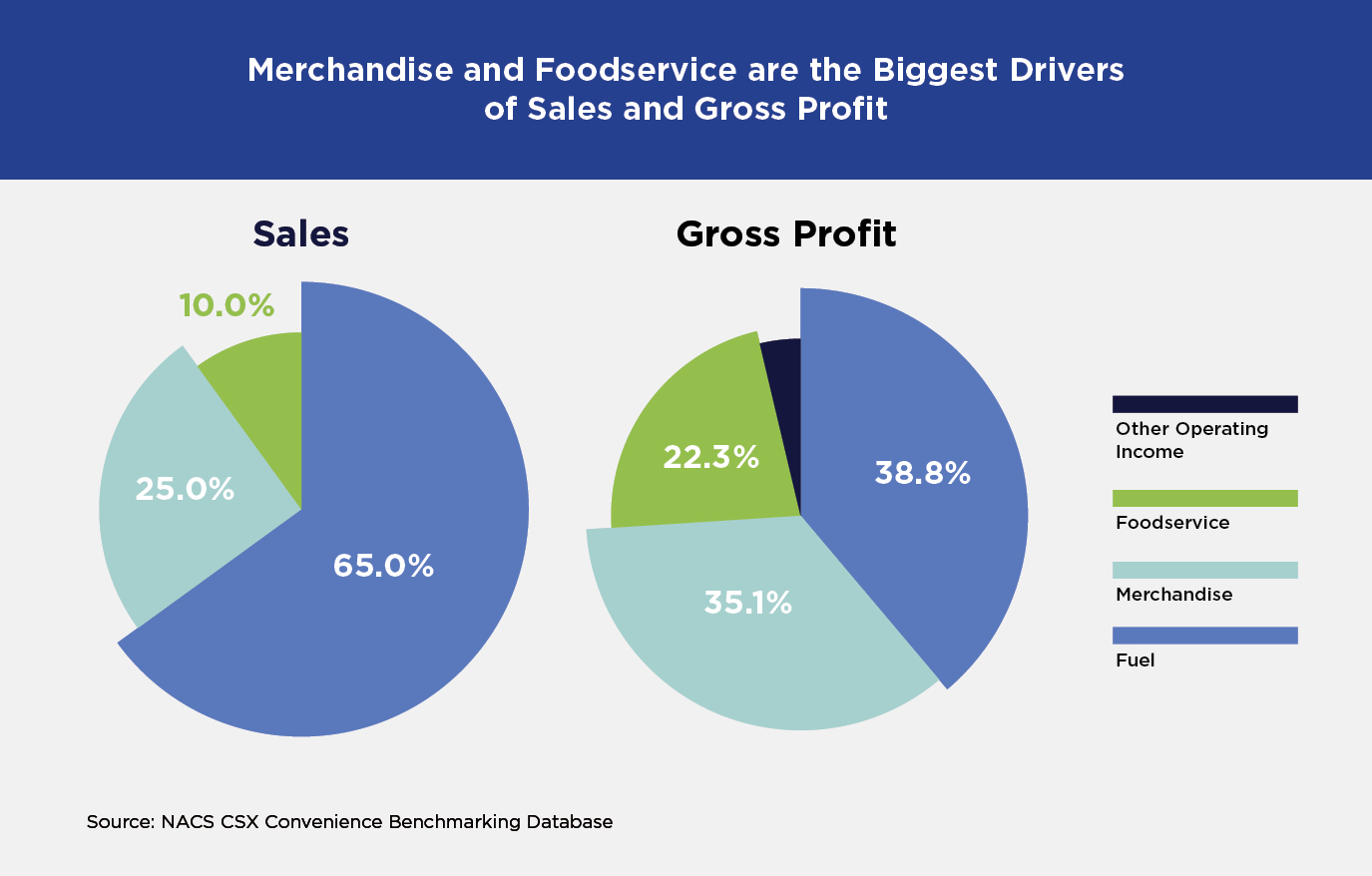
Although the c-store industry had record in-store sales in 2025 for the 23rd consecutive year, it was a close call. Merchandise and foodservice represented 35.0% of average store sales and 57.4% of gross profit.
Here’s a look at the in-store metrics shared at the 2026 NACS State of the Industry Summit.
Foodservice Is the Growth Engine
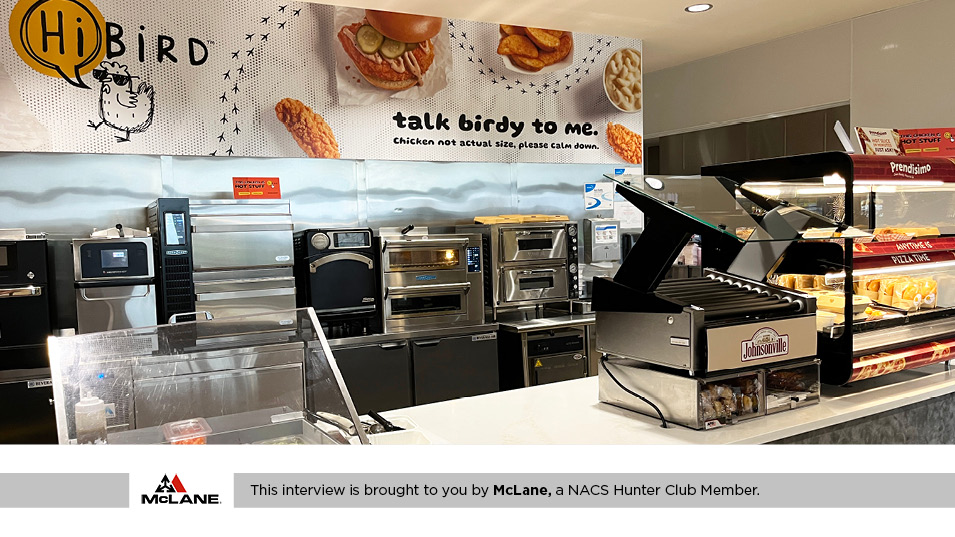
The fast-growing role of foodservice over the past five years is impressive. It continues to prove a powerful growth engine, accounting for 28.5% of inside sales and 38.9% of inside gross profit.
Defined as the combined categories of prepared food, commissary and hot, cold and frozen dispensed beverages, foodservice is a main trip driver for why customers visit convenience stores: to satisfy hunger and thirst.
At the category level, prepared food alone would rank as the No. 1 in-store category overall, surpassing packaged beverages in both sales and gross profit. (More to come on those metrics.)
As we look at overall foodservice performance in 2025, there are some ups and downs that will continue throughout 2026:
- Prepared food sales were nearly flat year over year, reflecting ongoing consumer financial stress and aggressive value promotions from QSR competitors.
- Hot dispensed beverages delivered higher sales but saw margin decline, driven by rising commodity costs and global coffee supply pressures.
- Cold dispensed beverages, meanwhile, surged thanks to product innovation and trends like dirty soda.
- Commissary peaked during the Covid pandemic as quick, fresh, grab-and-go packaged items were in high demand. In the past few years, the category has remained relatively flat.
Foodservice is where the stakes are the highest. Companies with well-developed, industry-leading foodservice programs didn’t build those programs overnight. To be successful with food, it cannot be treated as just another category.
Plugging the Foodservice Abandonment Gap
Given the opportunities with foodservice, there is an abandonment issue to address—and it’s a costly one.
Roughly one-third of convenience store shoppers plan to stop at a QSR within 30 minutes of their visit. This translates to over $100 billion per year that the c-store industry is losing to QSRs.
Why are they leaving? According to NACS shopper insights research from the Convenience Voices program, shoppers consistently cite variety and availability as top reasons for going elsewhere. At the same time, the reason they choose a convenience store in the first place is for convenience.
This creates both urgency and opportunity. Convenience stores don’t need to out-QSR the QSRs—but they can take a page or two from their playbook.
We hear a lot about differentiation and leaning into what you can be famous for. People know what they can expect at a QSR, whether it’s a burger, pizza, Mexican or chicken chain, and they know which QSR brand will satisfy their craving.
Many convenience stores, however, don’t
have this type of food-forward recognition—at least not yet. Traditionally, c-stores sell the same thing. This creates a sea of sameness inside the store that transfers to the foodservice offer. To excel at foodservice, think about differentiating your offer and being famous for something.
Merchandise Is the Workhorse
After years of inflation-driven price increases, 2025 brought some relief to the six core c-store merchandise categories: cigarettes, OTP, packaged beverages, beer, salty snacks and candy, which make up the lion’s share of in-store sales and profit.
Packaged beverages and cigarettes remain the largest categories in terms of sales contribution. In terms of year-to-year sales growth, packaged beverages and OTP led the way, while salty snacks, candy, and alternative snacks also saw strong growth.
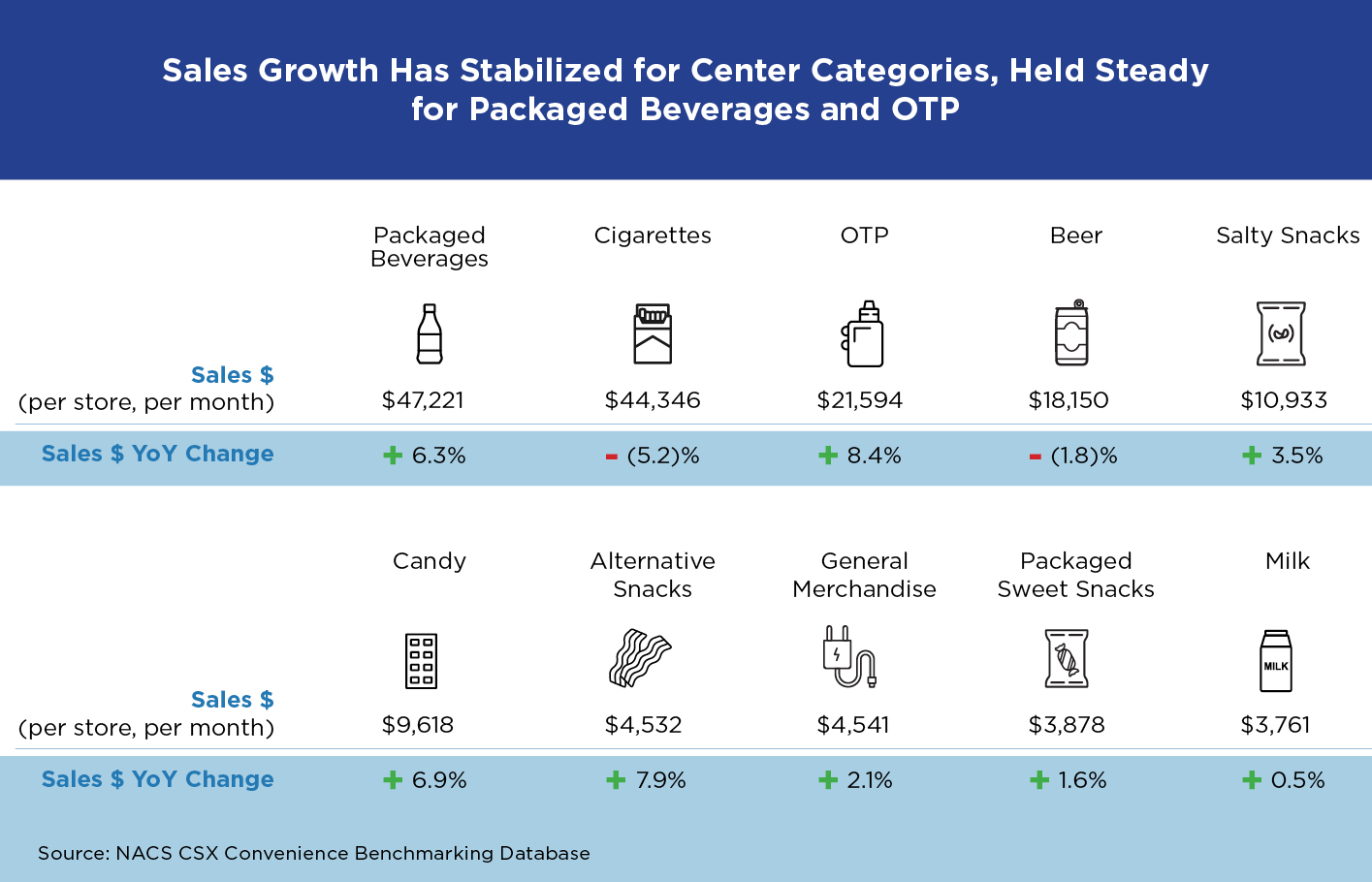
Here are some in-store merchandise highlights:
- For the first time, OTP surpassed cigarettes in gross profits per store, per month, likely due to a combination of factors including polyusage and consumers shopping both categories.
- Inside the cold vault, packaged beverages and beer are responsible for just over 25% of both sales and gross profit, with over 80% of that profit coming from packaged beverages.
- Energy drinks continue to drive growth for the packaged beverage category, but the category stays strong by satisfying a variety of customer needs.
- “I’m thirsty” is the No. 1 reason shoppers visit c-stores, according to NACS Convenience Voices data.
- Beer sales decline in 2025 was a result of several factors, including shifting consumer behavior and increased consumption of ready-to-drink wine and liquor-based products.
- Candy and salty snacks lead innovation and keeping the channel “fun;” 435 new candy and salty snack items were introduced into the channel in 2025.
Opportunity Inside the Store
The in-store business is not just sales and units—it’s financial health, category and product assortment acumen, attention to shopper behavior and overall operational efficiency.
There’s no question that 2025 was a challenging year, and there are forces at play on a geopolitical stage that could impact consumer sentiment and shopping behavior throughout 2026. It’s important to make sure no stone is unturned. Make a plan and identify:
- Specific categories that can do more work for the business
- Customer segments that offer the greatest opportunity for higher frequency and loyalty
- How you can streamline operations and reduce controllable expenses to protect profit when trips are down
Customers come to convenience stores hungry, thirsty and looking for a quick and easy solution. The industry is uniquely positioned to meet those needs and keep the focus on boosting transaction counts and building bigger baskets.