Americans love pizza, the Italian invention that became a U.S. phenomenon. The National Association of Pizzeria Operators reports that Americans consume a total of three billion pizzas annually. But pizza’s long-held delivery advantage has largely disappeared as third-party delivery platforms have made most restaurant food equally accessible.
The category is also facing increasing competition from other foodservice options. QSR pizza sales were high during the pandemic, but they experienced a 0.3% year-over-year decline in 2025, following a small gain of 0.6% in 2024, according to Technomic. Asian cuisine grew 7.8% in 2025, while Mexican increased 4.7%. Chicken also continued its strong momentum, with sales rising 5.3% in 2025 after a 9.1% jump in 2024, Technomic data shows.
The Big Cheese
When it comes to producing and selling c-store pizza, the hands-down winner is Casey’s, based in Ankeny, Iowa, which moved nearly 50 million pizzas in whole-pie equivalents in its most recent fiscal year.
Based on recent company filings and industry rankings, Casey’s is the nation’s fifth-largest pizza outlet by sales, behind only the traditional giants: Domino’s, Pizza Hut, Little Caesars and Papa John’s. Casey’s introduced pizza to its locations in 1984.
Today, it’s still made by hand with made-from-scratch dough and high-quality ingredients, including 100% whole milk mozzarella cheese. Both grab-and-go slices and made-to-order pies are available in most of Casey’s 3,000 locations.
“We operate like a restaurant,” said Brad Haga, senior vice president of prepared food and dispensed beverages at Casey’s. “Our foodservice program is central to who we are and a core driver of our guest experience, not just an add-on to our fuel and convenience offerings.”
Andrew Kintigh, executive chef and culinary director for Casey’s, is supported by culinary experts, food scientists, operators and team members in every kitchen. “Chef Andrew’s team works in close collaboration with our category managers and business owners,” said Haga.
Casey’s gathers feedback from testing specialty items, new flavors and new platforms, and through in-store interaction with customers.
“What’s been consistent is that people are looking for variety, quality and value,” said Haga. “And that’s why they keep coming back to Casey’s. We believe that any good idea can make it onto the menu, and our creative innovations are a big part of the experience and why people choose Casey’s.”
Variety Is the Slice of Life
Pizza’s versatility makes it easy to offer different varieties for different customers.
Will Welch, director of foodservice for La Crosse, Wisconsin-based Kwik Trip, details its four different pizza styles: “We have the traditional take-and-bake, and take-and-bake with a thin crust. We have versions of a high-quality frozen pizza with better ingredients, and we have a basic frozen pizza, the kind a college student wants.”
In addition to selling whole thawed and frozen pies to go, stores cook the take-and-bake pizzas in a high-heat oven to sell by the slice from a hot box. A typical pizza cooks in about 10 minutes, but a thawed thin-crust pizza is ready in half that time. Every Kwik Trip pizza is made at the company’s commissary in La Crosse.
“I don’t think many competitors can say they’re producing all the pizzas they sell in the store,” said Welch.
Kwik Trip offers four to six LTOs each season, most of which are creations of the foodservice team. “We’ve had a jalapeño popper pizza and jalapeño popper [combo] take-home meal,” said Jeremy Haack, director of foodservice. “We’ve had Buffalo chicken, and we have a Mediterranean pizza for Lent.”
Cheese curds aren’t simply a Midwest snack; they’re iconic treats. “We introduced a sausage and cheese curds pizza that was so popular that it’s now a permanent menu item,” Haack said.
Sales are steady, Welch said, but the pizza market is crowded. “We aren’t losing units of pizza, but are we growing as fast as we want? Probably not,” he said. “I think there are a lot of pizza places out there focusing on good-quality ingredients, and that’s what people are looking for these days.”
Developing a pizza program requires a lot of “listening, tasting and research,” said Rachel Saddler, director of foodservice innovation at Nashville-based Tri Star Energy, operator of Twice Daily and Sudden Service c-stores.
“We pay close attention to food trends, gather feedback from our guests and store teams and spend a lot of time testing new ideas before anything reaches our menu,” said Saddler, who has a culinary degree and has trained as a professional chef. “We also keep an eye on what successful pizza brands are doing. They’ve spent years learning what customers love.”
Convenience and daypart play a big role in pizza purchases. Sixty-seven percent of Tri Star Energy’s slice sales happen before 2 p.m., with 44% of all slice purchases at lunch. Whole pizzas follow a different pattern.
“They’re strongest during the dinner daypart, and we’ve even seen overnight whole-pizza sales outperform breakfast,” Saddler said. “That tells us guests are increasingly viewing convenience stores as a destination for dinner and late-night meals, not just a quick stop for a slice.”
Ready-Made Pizza
Not every c-store retailer can add a full-time chef to its staff or build a proprietary commissary. That’s why operators choose turnkey programs to offer the foods customers want without the challenges of starting from scratch.
“The primary benefit of a turnkey, branded program like Hunt Brothers Pizza is that it gives convenience store operators a proven foodservice offering without requiring the space, staffing or operational complexity of a traditional restaurant,” said Dee Cleveland, head of marketing for Nashville-based Hunt Brothers Pizza.
Available in 11,000 outlets, the program provides each retailer with a dedicated account manager to assist with setup, training, direct-store delivery, inventory management and marketing support. The concept can fit in as small as 59 square feet and be operated by an existing employee.
“The program works well for independent c-store operators across a variety of markets, including rural communities where convenient foodservice options may be limited,” Cleveland said.
Hunt Brothers still sees strong demand for favorites including pepperoni and sausage, but customers want LTOs and new flavor experiences, too. To that end, the company is collaborating with Mike’s Hot Honey on a pepperoni pizza with a twist, Cleveland said.
Buffalo, New York-based Rich Products Corp. recently introduced new offerings in the company’s turnkey pizza program, including flatbreads, gluten-free options and a pizza crust targeted at health-conscious pizza lovers.
Earlier this year, Rich’s acquired the Great Kitchens Food Company, North America’s largest manufacturer of private-label, take-and-bake pizzas and home of the Uno Foods brand. The acquisition expands Rich’s topped-pizza offerings, including a Chicago-style deep-dish pizza and several handheld products with Great Kitchens’ premium toppings.
Rich’s has also created a protein-powered pizza crust in response to evolving consumer demands, “but without sacrificing taste,” said Donna Reeves-Collins, senior vice president, pizza, breads and handhelds, at Rich Products. This option gives foodservice operators a way to add functional benefits to their menus, she said.
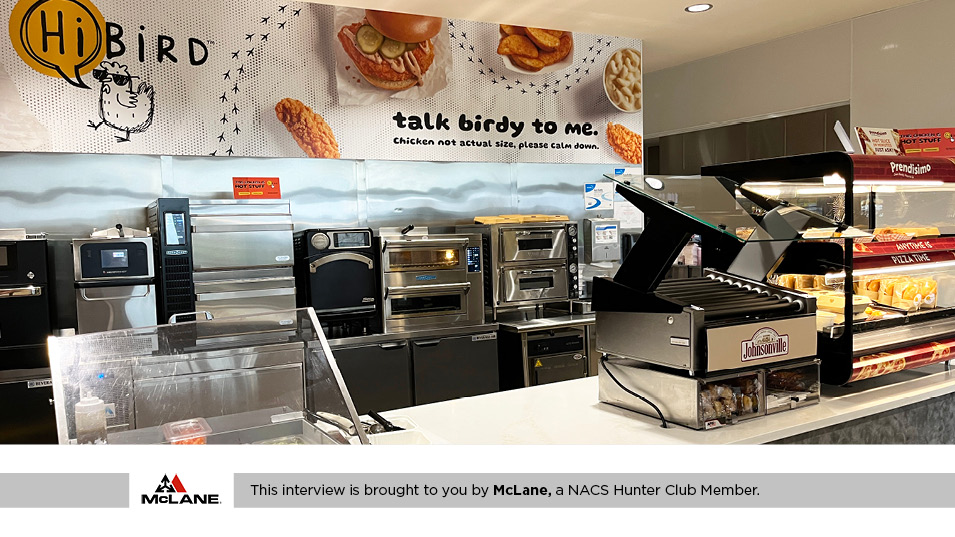
Prendisimo Duo Slice, McLane’s turnkey pizza program, was developed with c-stores in mind and rethinks the traditional whole-pie merchandising model. It offers the flexibility of preparing two slices instead of a whole pizza, which leads to less waste and fresher pizza, said Farley Kaiser, vice president of retail foodservice at McLane Co., based in Temple, Texas.
The program requires a rapid-cook oven, freezer storage and a standard hot-hold merchandiser; multiple equipment packages are available. The frozen pizza is baked in under four minutes and requires minimal labor and training.
The concept’s biggest benefit is operational flexibility, Kaiser added: “Retailers can offer multiple pizza varieties in the same warmer space while significantly reducing shrink. … Consumers are more likely to encounter hot, freshly baked pizza rather than slices that have been sitting under a warmer.”
Current Duo Slice varieties are pepperoni, gourmet cheese and meat lover’s, which combines pepperoni, Italian sausage, ham and bacon. But “the program also supports future flavor innovation and limited-time offerings as consumer tastes evolve,” said Kaiser.
“Consumers love pizza,” she continued. “Quality toppings matter. Consumers consistently rank toppings as one of the most important elements of a great pizza experience. Premium proteins and differentiated flavor profiles continue to drive engagement. Ultimately, success comes from balancing quality, operational simplicity, freshness and value, not sacrificing one to achieve another.”
C-store operators hesitating to add pizza to their menus because their territory already has a plethora of pizza providers might want to look at the situation differently.
“That means the people in your town really like pizza,” Welch of Kwik Trip said. “If you have an oven, pizza is an easy thing to bring into your store.”