This Q&A is brought to you by The Imagine Group.
In a modern convenience store environment, what makes signage effective?
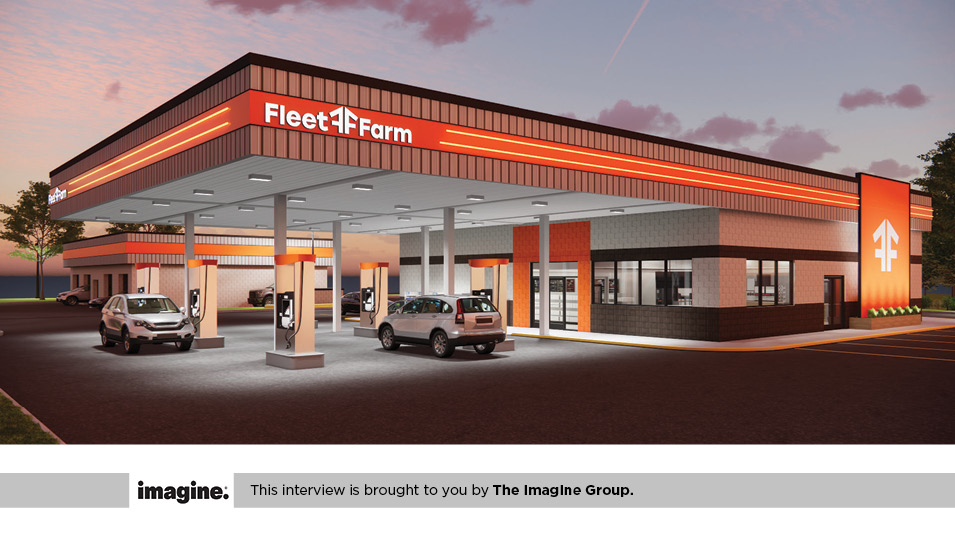
Andy House, Vice President, Imagine Studio Agency, The Imagine Group: Signage starts outside the store. Before a customer ever walks through the door, you have opportunities to tell them what’s worth stopping for, whether that’s at the pump, on the windows or along the road. Think about where you’re catching the most attention and use that to tell a story.
Consumers have more choices than ever. Retailers need to quickly communicate why their store is worth the stop. We see a lot of success when stores use signage to highlight food, value and limited-time offers, especially when those messages change throughout the day. A breakfast message in the morning shouldn’t be the same message customers see at lunchtime.
Once customers are inside, the role of signage changes. It becomes less about driving a transaction and more about creating a connection with your consumer. Convenience stores have evolved—signage helps tell that story. The stores that stand out are the ones that make customers feel like they’re getting more than a transaction.
How can retailers use in-store displays to better connect with customers?
Food is driving a lot of decisions right now, so it’s a huge opportunity. We’re seeing retailers invest heavily in foodservice, and impactful displays help bring those offerings to life.
We have helped retailers create in-store experiences through graphics, lit-décor and signage, wayfinding and environmental branding. In some stores, that might mean using custom iconography to help customers navigate the space. In others, it might be highlighting food with illuminated signage or wall graphics.
We’ve seen retailers experimenting with merchandise and product rotation to create a sense of discovery. When customers encounter something new, it gives them another reason to come back. Signage plays an important role in drawing attention to those changes.
What are some best practices for in-store displays and signage?
One of the biggest mistakes retailers make is trying to put messaging everywhere. Too much messaging can create clutter and make it harder for customers to focus on what’s important.
We encourage retailers to be strategic about where they place displays, because intentional placements will get the most engagement. The best locations are often areas where shoppers naturally pause or look while moving through the store.
We build display strategy around the idea of “see, feel, believe.” First, shoppers need to understand where they are and where they’re going through wayfinding or directional signage (the “see”). Then you create an emotional connection with compelling imagery and promotional messages, right at their eyeline where it’s most impactful (the “feel”). Finally, you help them make a purchase decision with product information and pricing at the shelf (the “believe”).
When those elements work together, the entire shopping experience feels more seamless.
The imagine Group has designed large-scale activations. How do those drive customer engagement?
We’ve worked on store takeovers where an entire location is transformed around a campaign or event. Those are some of the most fun projects because they turn a convenience store into a 360-degree experience.
One example was a “Jurassic World Rebirth” activation where three convenience stores were completely transformed around the movie release. Every signage opportunity was reimagined and at one location we even fabricated and installed large dinosaur sculptures. The goal was to build anticipation and give people a new reason to visit.
What makes these activations so powerful is that the impact extends beyond the store. Customers post photos, influencers get involved and organic media coverage builds leading up to the actual pop-up, creating hype and anticipation.
In the case of the “Jurassic World” takeover, engagement was so strong that the activation ended up being extended two weeks beyond its original timeline. It’s a great example of how physical retail experiences can generate both in-store traffic and online buzz.
Gen Z consumers shop differently—what should retailers know about younger audiences?
Gen Z has become one of the most important customer groups in convenience retail with the largest growing wallet share. They’re less loyal to specific brands than older consumers and much more willing to try something new if it catches their eye or feels relevant to them.
What they value is personalization. Our research shows 85% of Gen Z is interested in receiving personalized offers from merchants. They want experiences, products and offers that feel tailored to them rather than broad, one-size-fits-all promotions. Convenience is still important, but they’re also looking for authenticity and discovery.
These generations are a driving force in food purchases. Gen Z consumers are interested in trying new flavors, different cultural influences and products that feel unique.
We’re also seeing growing interest in local products and local stories. Customers increasingly want to know where products come from and how they’re connected to the communities where they live. Eighty percent of Gen Z customers are willing to pay for more locally sourced goods than non-local items. Retailers that can communicate those stories have an opportunity to stand out.