As electric vehicle chargers spread across the forecourt, convenience retailers are learning that the real opportunity is not just in selling electricity. It is in giving EV drivers a reason to come inside—and a reason to come back.
For decades, fuel retail was built on speed: pull in, pump gas, grab a drink, get back on the road. EV charging is forcing operators to rethink that formula. The average fuel transaction lasts between three and four minutes, but EV charging sessions typically last around 30 minutes. When drivers stay longer, the forecourt becomes less a place for a quick transaction than a place to win a longer, more profitable visit.
That’s a key measure Global Partners is using as it builds new stores or remodels its Alltown Fresh sites to break the barriers of how consumers view convenience stores.
“The point of success is not just the charging session, but it is all the other amenities around that charging session,” said James Cater, senior director of sustainability strategy and innovation at Global Partners LP. “You don’t get that chance in any other place that I know of in the convenience retail space. No customer is going to be at your site for 30 minutes except for an EV customer. And that’s a whole new opportunity that has not existed before.”
That is changing how operators think about retail. The question is no longer simply where to put chargers or who should own them. For those choosing to embrace EV charging, it is how to turn charging time into store traffic, bigger baskets and stronger loyalty. That is driving investments in better food, cleaner restrooms, safer sites, digital engagement and a broader set of amenities designed to make a charging stop feel worth the wait.
Some retailers want to own and operate chargers themselves, betting that control over pricing, uptime and the customer experience will pay off in the long run. Others prefer partnerships that let them focus on merchandising and hospitality while a third party handles the charging network. Either way, the strategy is shifting in the same direction: from selling fuel to staging a retail experience around longer dwell times.
That is especially attractive in a channel where foodservice, packaged beverages and prepared meals already generate some of the best margins in the box. EV charging effectively creates more time for those categories to work.
Creating an Experience
For some operators, EV charging is beginning to look less like a side business and more like a core part of the forecourt. While Global Partners started its EV journey with a third-party owned and operated site, it now opts to own and operate the entire footprint.
“Owning the chargers, operating the chargers—we do this for a number of reasons,” Cater said. The biggest is consistency. “From when they arrive onto our sites to when they leave our sites, we love to control that entire customer journey and have it be consistent. Whether it’s somebody who fuels up with gas or fuels up with electrons, we are controlling that experience.”
While it added its first EV chargers in 2023, Global Partners is just at the beginning of its electric-vehicle strategy. It currently operates seven EV charging sites, with another six in development.
“We are accelerating our EV deployment,” Cater said. “Doing it in small steps. We open a couple of sites and ask, ‘How are they doing?’ Then, let’s do another four. Then, let’s open another six or even 12. It’s a ramp-up because you become comfortable with this kind of operation.”
Arko Corp.’s GPM Investments also is scaling up. With more than 1,400 c-stores in 33 states, GPM has 90 live charging sites with 269 active ports, plus 62 more sites approved or under construction, and more to come.
“We view EV charging as a long-term mobility and customer traffic opportunity for convenience retailers,” said Michael Bloom, executive vice president, chief merchandising and marketing officer. “While the economics are still highly market dependent, EV charging can help drive forecourt traffic, keep our sites relevant over time and create incremental in-store sales opportunities due to longer customer dwell times.”
That emphasis on traffic and basket growth demonstrates how retailers are reframing charging economics. A charger does not have to stand on its own as a pure energy asset if it helps bring in a shopper who buys coffee, a made-to-order sandwich, snacks or a meal.
Building the Basket
That is where retail strategy really starts to change. “We’re obsessing over what’s in the basket,” said Jac Moskalik, vice president of food, innovation and strategy at Global Partners. “When you go and look at the tickets that are being purchased, we look at the customers that we’re attracting and determine if we’re speaking to the customers that we want to.”
“What we’re doing is breaking that barrier to the consumer’s perception that you can get an amazing food experience inside of a convenience store,” Moskalik said. “They’re designed differently, with different aesthetics. When you go inside the store, there’s additional product variety. We going really big on local in [our] stores.” Bloom says the economics of EV charging are highly market dependent. But the retailer has found some familiar product categories in primary areas to invest in EV-charging locations.
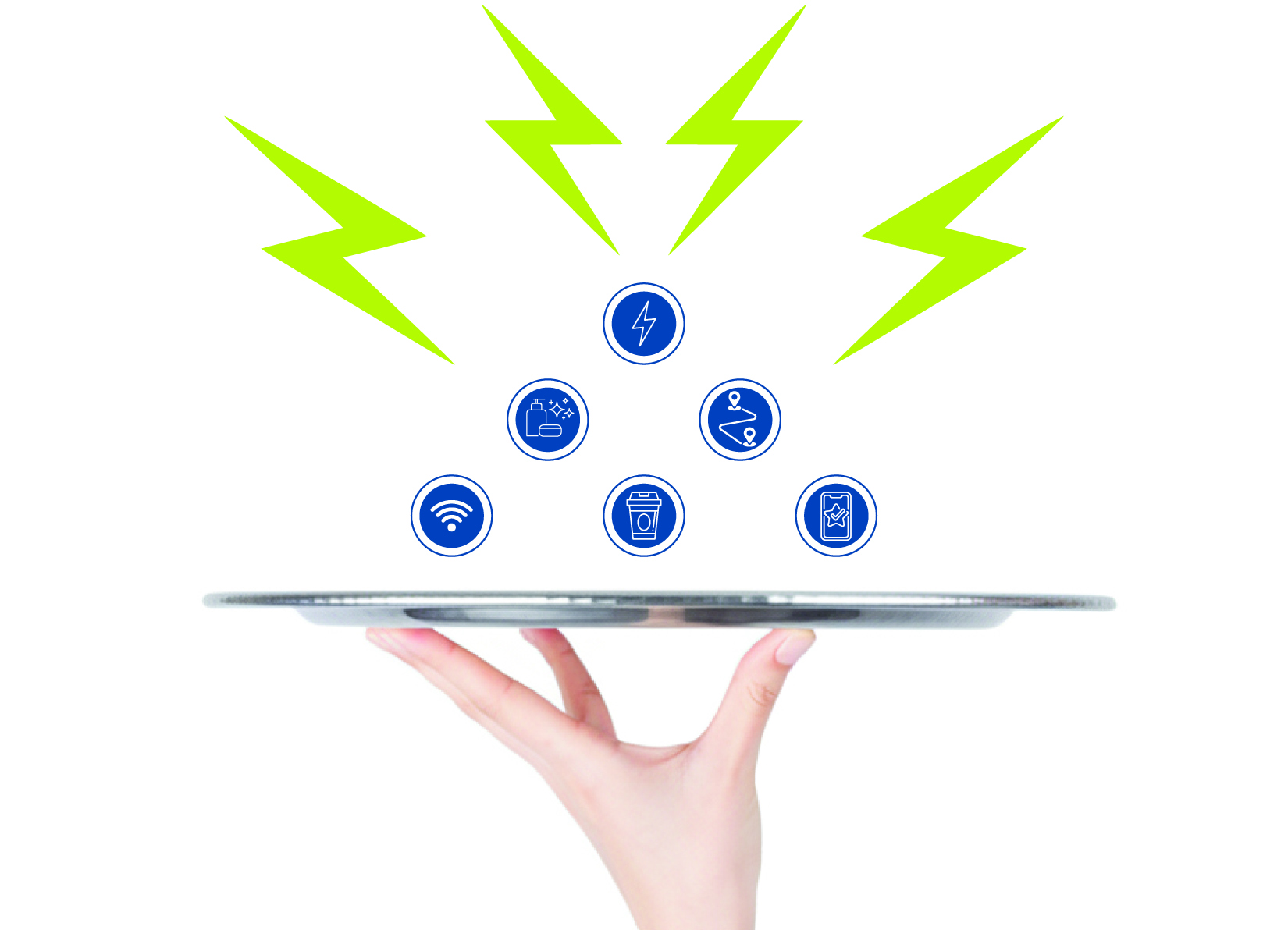
“Food and beverage are the strongest revenue generators,” he said. “Top segments include beverages, coffee, hot food items, meals and snacking.” He also pointed to amenities that matter during longer visits: “clean, comfortable restrooms, wi-fi, air conditioning and safe well-lit environments.”
According to a 2026 report by Paytronix, EV customers generate 340% higher in-store revenue per visit compared to traditional fuel customers. The report says they tend to have a strong preference for sustainable and organic food options and show a 40% higher rate of engagement with loyalty programs.
“EV drivers tend to be digitally engaged so they respond well to loyalty programs,” said Moskalik. Cater at Global Partners said EV drivers consider these and other local amenities when considering where to stop to charge a vehicle.
A retailer needs to ask itself, “to what extent can you get the customer out of their car while they are charging and into the store?” he said. “It’s actually at a higher rate than you would normally get with a gas vehicle. But you want to push that rate higher and higher. That’s where the real success comes in.”
A spring 2026 study of EV charger use data by Paren suggests drivers consider the number of businesses and services available to them at or near a charging unit. “Stations that have 11 or more nearby amenities see seven times the utilization of isolated ones,” the report concluded. “A single anchor, like a big-box store, still performs well on its own, but amenity variety strongly helps.”
The study by Paren, a data and analytics platform for the EV industry, shows EV charger sites with “some” nearby amenities—from shopping malls, pharmacies, grocery stores, coffee shops, restaurant and other types of retail—averaged nine charging sessions per day, while those with 11 or more amenities scored 28 sessions. Those with no nearby amenities averaged just three sessions per day.
The best traffic driver is grocery stores, which drive an average of 42 charging sessions per day. Convenience store/gas station locations see about 13 sessions.
“The data suggests the impact of EV charging extends well beyond the charger itself,” said John Eichberger, executive director of the Transportation Energy Institute, which partnered with Paren and Electric Era on the study. “The broader retail and economic effects emerging around charging locations are becoming difficult for the market to ignore.”
Amenities Matter
Longer dwell times also raise the bar for site design. Love’s Travel Stops has more than 200 EV chargers at 42 locations in 15 states and plans to add another 100 chargers this year, according to Kim Okafor, director of strategic growth for zero-emission solutions at Love’s Alternative Energy.
“On average, the EV charging experience can last about 20 to 30 minutes, compared to a five-minute gasoline experience,” Okafor said. “The more onsite amenities that can be accessed during the charging time frame, the better the EV charging experience for the customer and for Love’s.”
Love’s next-generation charging format includes “canopies to protect drivers from weather with typical amenities such as trash cans, windshield cleaning supplies and DC fast charging,” she said, along with “24/7 access to clean restrooms, fresh food, quick-service restaurants and more—not something all EV charging experiences offer.”
That list sounds routine in traditional fueling, but it becomes a competitive differentiator in EV charging because not every charging location offers it. A driver can find chargers in a mall parking lot, behind a big-box store or at a dealership. But a well-lit travel center or convenience store with food, bathrooms, wi-fi and a comfortable place to pause offers a more complete experience.
“To the extent we can offer a premium convenience experience at our Alltown Fresh and Honey Farms brands, I think customers over time will gravitate toward that experience, just like they do with the gas customer,” Cater said. “Sure, you can shop on price. But at the same time, you’re also shopping around on places that make you feel safe, make you feel good. ... That’s what we’re gunning for.”
That is one reason Wawa’s messaging around its IONNA partnership is so telling. In a July 2025 press release announcing the deal, Wawa described the offer as a “one-stop for fresh food, beverages and EV charging.” The partnership pushed IONNA’s contracted bays past 3,000 units. The new Wawa-hosted “Rechargeries” will include 400kW dispensers, canopy coverage, car-care amenities and full access to Wawa’s store offer.
That language captures the heart of the strategy shift. The charger is not the entire product—it is part of a broader bundle that combines fueling, foodservice, comfort and convenience.
And data reinforces the strategy. A 2024 Consumer Reports study found that installing EV chargers can increase foot traffic by an average of 4% and revenue by 5% at retail locations.
Other studies recently summarized by CyberSwitching, a company that specializes in commercial EV charging stations, show that a single charging station brought in an average of $3,412 annually in additional spending at nearby businesses between 2021 and 2023.
Meanwhile, research from Gilbarco Veeder-Root and its EV unit Konect reported that 93% of EV drivers are willing to pay a little more to avoid a 20-minute detour to charge. The most desired amenities, it said, as free wi-fi, clean restrooms, loyalty perks and food and drinks on site, a preference set that lines up neatly with the strengths of the convenience channel.
A Strategic Shift
So how are fuel retailers changing their strategies as they add EV chargers? They are shifting from a model built around rapid fuel transactions to one built around managed dwell time. They are investing in premium food, beverages and store environments that can hold a customer for 20 or 30 minutes. They are emphasizing amenities that matter more when drivers remain on site. They are using digital loyalty and basket analytics to understand how an EV shopper behaves differently than a gasoline customer. And they are treating charging not merely as a utility service, but as a catalyst for broader retail transformation.
In other words, the forecourt is no longer just a place to fuel a car. Increasingly, it is setting the stage for a larger retail experience.
That is likely to be the industry’s biggest lesson from EV charging. The competitive advantage will not belong simply to the retailer with a plug in the parking lot. It will belong to the retailer that turns charging time into reasons to enter the store, buy more, feel comfortable, and come back.