This Q&A is brought to you by Cash Depot.
Cash management is so important for convenience retailers—is there anything you think businesses overlook in this area?
Doug Marquis, chief revenue officer, Cash Depot: Retailers don’t always realize how much traditional cash management is costing them behind the scenes. It’s not just the obvious expenses—it’s everything happening day to day.
There are direct costs, like bank deposit fees or armored transportation fees. But you also have employees making bank runs or waiting on armored carriers instead of helping customers. Staff must count drawers at the start and end of each shift and prepare deposits. It all adds up.
Another big factor is cash flow. Waiting times and potential credit adjustments can impact cash flow and access to funds for operating and growing the business. For instance, cash can sit in the store or in transit for days before it’s actually deposited into the business. And any smart safe money that is still physically in the safe but is also digitally in the bank account is a “temporary” credit that is subject to adjustment when the real money lands.
When you really look at the full picture, good cash management is about eliminating inefficiencies and giving retailers a smarter, more streamlined way to run their businesses.
What does it mean to recycle cash inside a store? Why is that valuable for retailers?
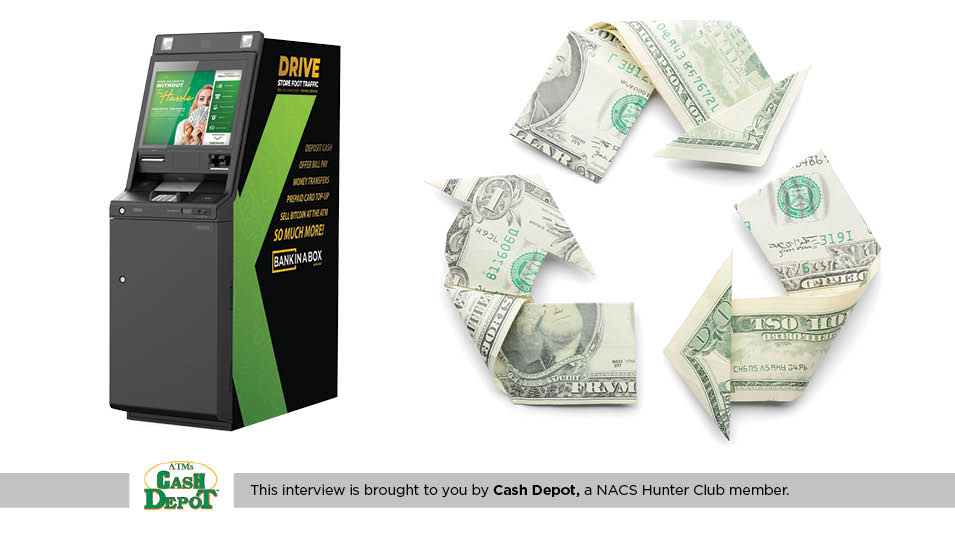
Marquis: Cash recycling means putting your money back into circulation. Instead of paying to move cash out of the store and then paying to bring cash back in, retailers who recycle their cash are maximizing the value of what they already have on-site.
For example, the cash a customer deposits today can be securely recycled to provide start-of-shift cash for employees, break large bills for registers or replenish the ATM.
That’s valuable because it reduces costs like bank runs and cash orders, and retailers maintain secure control of their cash. We like to say that cash shouldn’t just sit in a safe. It should be working for the business. Cash recycling turns cash from a static asset into an operational one, helping retailers reduce costs while improving day-to-day operations.
You’ve said that smart safes are only partial solutions. Where do they fall short?
Marquis: Smart safes are great at what they were designed to do, which is securely store cash and help automate the deposit process. But cash management is much bigger than making deposits.
Our philosophy has been that retailers shouldn’t have to build a patchwork solution. They should have one platform that manages cash from the moment it comes into the store until it leaves, while also creating new opportunities to serve customers. That’s why we built BANK IN A BOX.
What solutions does Cash Depot offer that go beyond a safe or atm to help with a store’s cash needs throughout the day?
Marquis: Retailers need one platform that supports the entire cash ecosystem—from the first employee opening the store to the last deposit of the day.
BANK IN A BOX does exactly that. It provides secure store deposits, start-of-shift cash, bill breaking and cash advances all while recycling the funds for consumer financial services. It’s all in a single, robust cash recycling machine. What makes that so valuable is that every function works together.
At the end of the day, we don’t see BANK IN A BOX as just a safer way to store cash and make deposits or even simply a better ATM. We see it as a complete in-store cash management and consumer financial services platform that helps retailers reduce costs, simplify operations and create new opportunities for growth.
Bank in a box also offers consumers other financial services—how does that boost business for convenience retailers?
Marquis: Consumer financial services give people a reason to make a special trip to your location.
Cash withdrawals are important, but we’re seeing growing demand for other services. In fact, industry research shows that more than 44% of consumers are interested in self-service bill payment, 31% want the ability to load or purchase gift and prepaid cards and there is continued demand for accessible, convenient ways to purchase money orders.
The key is making sure those services are marketed outside the store. When consumers know they can pay bills or purchase digital gift cards at a store, the location becomes a destination.
Once customers are in the store, many don’t just complete their transaction and leave. They might grab a drink or snack. That creates incremental sales that wouldn’t have happened without those services.
We call it the “foot traffic effect.” Consumer financial services at Cash Depot’s BANK IN A BOX don’t just generate transaction revenue. They create new customer visits. Every additional visit is another opportunity to build customer loyalty and grow overall store sales.